

As the latest Critical Role season builds steam, preparing for the concluding part of its introductory phase and splitting the players into three separate groups, audiences are still discovering more about the mysterious world of Aramán, crafted by game master Brennan Lee Mulligan. The previous setting, the world of earlier campaigns, relied heavily on established Dungeons & Dragons lore. In contrast, one of the most exciting elements of this new season is how Mulligan plays with those common tropes to build something distinctly unique.
A Fresh Perspective on Celestials and Demons
Viewers have already been introduced to Aramán’s sad and twisted version of the heavenly beings, but the third installment, titled “The Snipping of Shears,” also provides some lore about their demonic opposites, the demons. This label has been used quite generically in Campaign 4, but what’s most interesting is that it also includes individuals that would be categorized as “tieflings” in other D&D settings, including the fiendish spellcaster Tyranny, played by Whitney Moore.
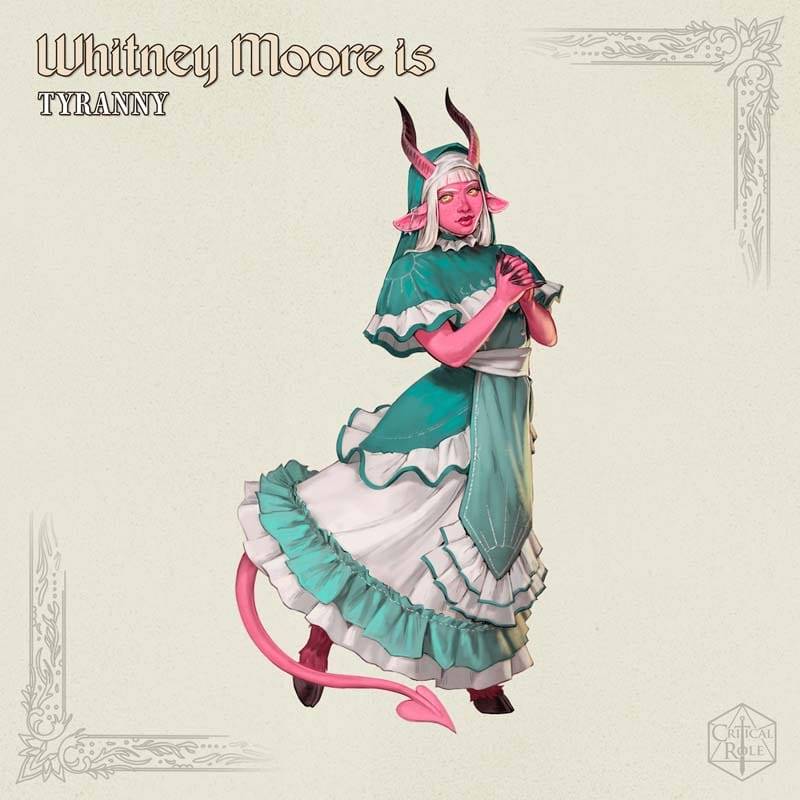
Historically, tieflings are mortals with Fiend ancestry, but it seems that in Aramán, they’re true demons whose essences have taken up residence in a physical form as the result of a deal. In episode 3, we learned that demons reside in a place called the Pit, ruled by an sinister entity called the Shadow of Suffering. Ksha'aravi made an agreement with a noble family, in which he would provide them with infernal agents to use as servants and as paragons of redemption for the Candescent Creed. As payment, he would receive mortal souls and some of the a mystical substance, a substance with holy qualities produced by the Halovars.
Deciphering the New Lore
If you are confused by this, many share your confusion. The Dungeon Master is a expert at hinting, and he’s being meticulous about how much he reveals in every installment. Still, it’s reasonable to infer from what we know that Aramán’s tieflings are demon souls who inhabit a mortal body. This is an interesting twist on one popular D&D character species, and one with the capacity to make it more interesting.
The Origins of Tieflings
The origin of tieflings goes back to 1994 and the iconic Planescape Campaign Setting for second edition AD&D. They were vaguely described as humans with extraplanar ancestry, implying it originated from devils, demons, or other evil planar beings. Planescape author the designer explained afterwards that he kept their background ambiguous on purpose because he simply wanted to create an archetype for a reformed devil/antihero persona, partially to attract the gothic and emo mindsets. Later versions of D&D, though, further defined and narrowed down those backgrounds (a decision that the creator criticized), leading to the current consensus that tieflings all have ancestry that leads to the Lower Planes.

While the specifics about that ancestry vary greatly, the shared trait is that these characters are humans with the blood of Fiends running through their veins. In the game, infernal creatures are the inhabitants of the Lower Planes of evil alignment, such as the Abyss, the the infernal realm, Carceri, the fiery pit, Pandemonium, and probably a few more that I’m forgetting. This cosmology is shared among almost all D&D settings, even the world of Exandria, which has had its ample number of demonic encounters. Although these malevolent beings are native to the infernal realms, they can be summoned to the mortal world or access it through portals. They come through with their corporeal forms, but they can only be truly slain on their home dimensions.
Breaking with Convention
The portrayal of the Pit and its inhabitants made in the third episode of Campaign 4 steers away from these common elements. The High Prince strongly resembles Asmodeus, the sovereign of the infernal kingdom, with all that scheming and soul bargaining, but my impression is that the fiends in this world lack a true physical body, or at least one they can use to access the “Material Plane” (or however it’s called in the world). The warlock character explicitly states in that episode that she was “given a body” just six months ago, and before that she was just a “swirling soul” in the Pit, so this appears to be the beginnings of tieflings in this new setting (future episodes may show classic versions actually exist, but considering that this character is a main cast member, this is unlikely).
The Original Vision
Returning to Zeb Cook’s interview, he explained that he created tieflings to fill a particular niche: the cursed, partially fallen hero/heroine, that wasn’t represented in the game’s high fantasy roster of options at the time. Planescape co-author the other designer added in that discussion that "Tieflings resonate because they're brooding and intense. They've got an automatic built-in secret. They're misfits and isolates, and they have a valid cause to shun society (and be shunned by it).” Over the years, however, the gloom that was baked into the background of tieflings faded away, and they simply became a highly favored character option with additional magical abilities and a cool, different look.
Embracing the Darkness
This is perfectly fine. You can play a happy-go-lucky tiefling who never contemplates about their infernal heritage, if that’s what you like. However, it’s believed that Brennan Lee Mulligan’s version shines exactly because it emphasizes that “dark” beginning, turning it into a core aspect of the character. In every way, these demonic characters have a body only because of the High Prince’s pacts with the Halovars. When she has the inevitable emancipation arc, freeing herself from the chains of her demonic brethren, it will seem impactful and intense because her race’s background is baked into the world’s mythology.
Looking Ahead
In addition to this fresh perspective at the fiend-touched, many are eager to discover additional details the Pit and this world’s fiends. I’m a big nerd for the game’s universe structure, particularly the lore of the Lower Planes. One could study about strife in the Nine Hells, fights among fiendish rulers, and the mysterious origins of the neutral fiends all day. Yet, this lore is fairly uniform in most fantasy worlds, so there is anticipation for some new, meaningful addition to it.


